Walkie-talkies for work: four kinds of business radio
Work radios come in four kinds. Two of them need no radio license. Two need a business license and give you more power and cleaner channels.
| Kind of radio | License | Hand-held power | Fits |
|---|---|---|---|
| License-free radio | None | PMR446 in Europe: 0.5 W1. FRS in the US: 2 W, 0.5 W on channels 8 to 142 | A shop, a school, a restaurant, one building |
| Licensed analog radio | Business license | 5 W on VHF, 4 W on UHF on the Motorola R23 | A large site, loud work, several buildings |
| Licensed DMR radio | Business license | Same power, two calls at once on one 12.5 kHz channel4 | Many teams, security, text and alarms |
| Push-to-talk over cellular | No radio license, a service plan | Uses the mobile network5 | Teams spread across a city or a country |
PMR446 and FRS are the license-free services of Europe and the US. "Licensed" means your company holds a license for its frequencies. DMR, short for Digital Mobile Radio, is an open digital standard written by ETSI, the European standards body.4
Pick two radio types below to see how they differ and whether they can talk to each other.
Compare two radio types
Pick two kinds of radio: see how they differ and whether they can talk to each other.
Business two-way radios by workplace
Start from the place, not the radio. The table gives a first pick for common workplaces. The sections below explain each choice.
| Workplace | What matters most | A good first pick |
|---|---|---|
| School | One campus, many staff, simple buttons | License-free radios. Schools also qualify for US business licenses6 |
| Restaurant, hotel | Quiet talk, guests nearby | License-free radios with earpieces |
| Shop, retail store | One floor, staff on the move | License-free radios. Motorola pitches its 900 MHz Curve at retail7 |
| Hospital, clinic | Many floors, many teams | Licensed UHF or DMR. Hospitals qualify for US business licenses6 |
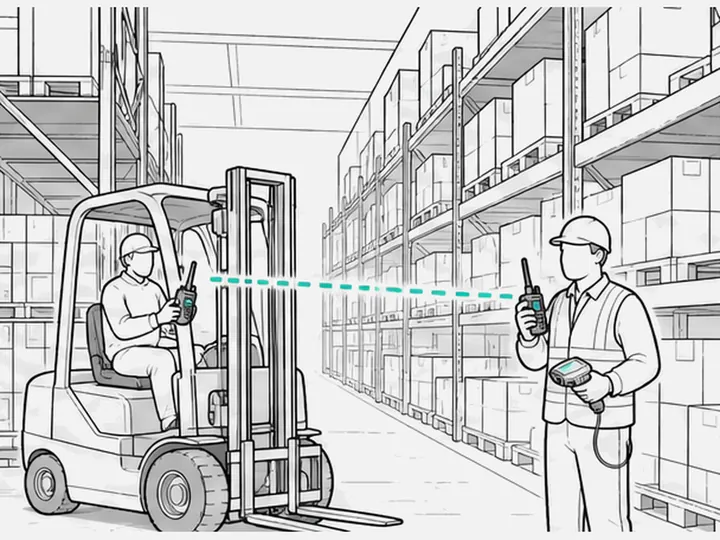
| Warehouse | A large single building | 900 MHz license-free radios or licensed UHF8 |
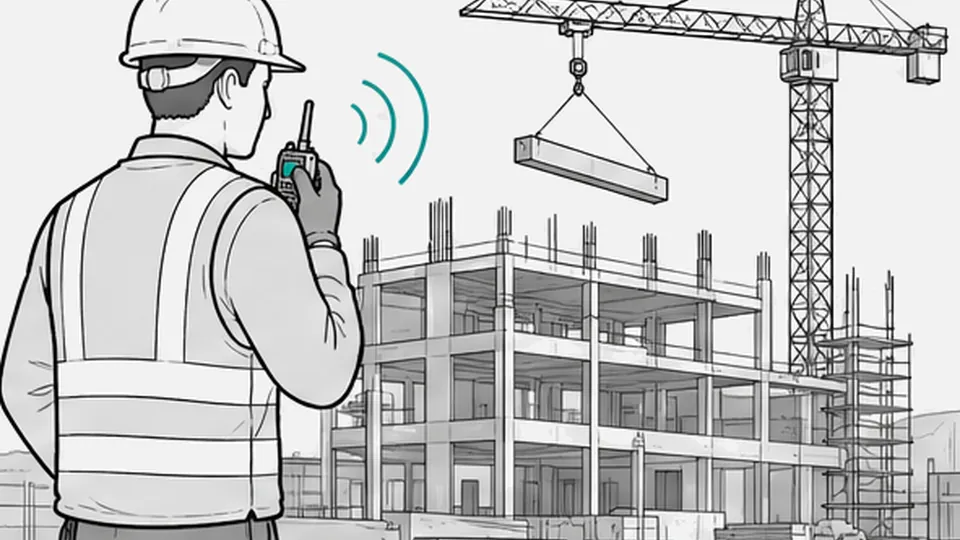
| Construction site | Noise, dust, rain, drops | Licensed UHF or VHF, sealed to IP67 or IP689 |
| Security team | Earpiece, alarms for staff alone | DMR radios with a lone worker alarm3 |
| Farm, ranch | Open land, long distances | Licensed VHF. In the US, MURS needs no license10 |
| Event | Radios for a few days | Rented licensed radios11 or license-free PMR446 |
License-free business radios
License-free radios are the quickest start. You buy them, charge them and talk. The trade-off is that everyone else may use the same channels.
In Europe and the UK the license-free service is PMR446. Radios must be hand-held, with a built-in antenna and at most 0.5 W. Base stations and repeaters are not allowed.1 A repeater is a radio on a high spot that resends calls to reach farther.
Motorola sells its XT420 as a business radio that runs on PMR446 with no subscription or call charges.12
Digital radios have a license-free band too. DMR Tier I is for license-free use at 446 MHz, with up to 0.5 W.4
In the US you have three license-free choices:
- FRS. The rules name business activities as a purpose of the service.2
- MURS. Five VHF channels at up to 2 W, for personal or business use.10
- 900 MHz digital radios. The Motorola DTR700 is license-free, with 50 channels.8
GMRS is not a company option. Only an individual aged 18 or older can get a new GMRS license.13
Licensed business radios: analog and DMR
A business license gives you frequencies chosen for your area and more power. Your channels are cleaner, and the radios reach farther.
Licensed hand-helds often run 4 or 5 W. The Motorola R2, for example, sends 5 W on VHF and 4 W on UHF and holds 64 channels.3 That is eight to ten times the 0.5 W of PMR446.1
Even small, simple radios can need a license. The Motorola CLS1410 sends only 1 W, yet Motorola's guide says you need an FCC license to transmit on its frequencies.1415 The same rule applies to Motorola's 2 W RMU2040.16
Analog radios are the simple, cheap choice. Digital DMR radios fit two calls into one 12.5 kHz channel.4 Motorola says its CP100d gives "twice the voice capacity" in one licensed channel and works in analog and digital modes.17
A dual-mode radio lets you mix old analog radios and new digital ones. The DMR vs analog guide explains the trade-offs.
Push-to-talk over cellular for teams across a city
Push-to-talk over cellular, or PoC, sends your voice over the mobile network. The device can be a phone or a radio-shaped handset with mobile data. Range is wherever the network reaches.
The Motorola TLK 110 is one example. It talks over LTE through Motorola's WAVE PTX service and can reach MOTOTRBO radios through that system.5 Zello Work is an app-based service that runs on Android and iOS phones over Wi-Fi or cellular data. Its Zello Bridge links existing two-way radios.18
PoC runs on a paid service instead of a radio license.18 It suits drivers, field staff and teams in several towns. Inside one building, radios still talk when the network is down.
How to choose walkie-talkies for work
Site size and floors
Makers state indoor coverage in square feet and floors. Treat these as best cases from the maker, not a promise.
| Radio | Band and power | License | Maker's claimed coverage |
|---|---|---|---|
| Motorola CLS1410 | UHF, 1 W | FCC license | Up to 200,000 sq ft or 15 floors14 |
| Motorola RMM2050 | VHF MURS, 2 W | None10 | Up to 220,000 sq ft or 13 floors16 |
| Motorola RMU2040 | UHF, 2 W | FCC license | Up to 250,000 sq ft or 20 floors16 |
| Motorola Curve | 900 MHz, 1 W | None | Up to 300,000 sq ft or 20 floors7 |
| Motorola DTR700 | 900 MHz | None | Up to 350,000 sq ft or 30 floors8 |
Outdoors, two people at head height reach far less than the box says. The long range guide gives real figures for open land and towns.
Buildings, open land and band
Pick UHF or 900 MHz for buildings, and VHF for open land and farms. VHF and UHF radios cannot talk to each other. The VHF vs UHF guide explains the difference.
Noise on the job
In loud places, the speaker matters more than the range. US employers must run a hearing conservation program once noise reaches 85 dBA over an 8-hour day.19 At that level, a radio speaker alone is hard to hear.
Choose a loud radio with noise suppression, plus an earpiece or a headset. Motorola rates the R2 at up to 101 phons and the R7 at up to 107 phons, and both offer noise suppression.39
Team size and channels
Give each busy team its own channel. Count the teams, then add one or two spare channels.
The XT420 has a 16-position channel knob, the DTR700 has 50 channels and 200 contacts, and a full-keypad R7 holds 1,000 channels.2089 If many teams share a large site, the business radio systems guide covers repeaters and trunking.
Weather and hazards
Rain and dust call for an IP rating. IP67 or IP68 means the radio is sealed against dust and water. The R7, for example, is IP68 to 2 m for 2 hours.9
Fuel depots, mines and chemical plants need a radio certified for explosive air. The R7 has an intrinsically safe option to the US standard TIA-4950, and Motorola sells an R7Ex with ATEX approval for Europe.921
Business radios compared
The first three radios are license-free PMR446 radios for Europe and the UK. The DTR700 is license-free in the US, and the rest need a business license. The power, water rating, battery and price come from our database.
| Radio | Power | Water and dust | Claimed battery | Approx. price |
|---|---|---|---|---|
| Motorola XT420 | 0.5 W | IP55 | 20 h | ≈ €144 single · Oct 2026 |
| Kenwood PKT-23 (PKT-23E) | 0.5 W | IP54 | 15 h | — |
| Hytera BD505LF | 0.5 W | IP54 | 12+ h | ≈ €186 single · Oct 2026 |
| Motorola DTR700 | 1 W | IP54 | 16.5 h | — |
| Motorola CLS1410 | 1 W | IP5X / IPX2 | 18 h | — |
| Motorola MOTOTRBO R2 | 5 W | IP55 | 22.5 h | — |
| Hytera PD405 | 5 W | IP55 | 12 h | ≈ €288 single · Oct 2026 |
| Kenwood NX-1300 | 5 W | IP54/IP55 | 14.5 h | ≈ £211 single · Oct 2026 |
| Motorola MOTOTRBO R7 | 5 W | IP68 | 19 h | — |
Business radio license costs: US, UK and Europe
Here is what a business radio license costs in three markets. The license guide covers other countries.
| Market | License-free option | Business license | Cost and term |
|---|---|---|---|
| US | FRS, MURS, 900 MHz radios | FCC Part 90 Industrial/Business Pool, open to companies, schools and hospitals6 | $105 to apply, renewal $35, plus a regulatory fee22; up to 10 years23 |
| UK | PMR446 | Ofcom Business Radio Simple UK Light, hand-held to hand-held, no base station | £75 for five years11 |
| EU | PMR446, digital PMR446 | A national license from each country's regulator | Set by each country |
In the US, a certified frequency coordinator first recommends a frequency for your area, and the application goes to the FCC with that recommendation.24
In the UK, Ofcom's Simple Site Light license covers a base station on one site, also for £75 for five years.11 Ofcom's Suppliers Light license lets a dealer rent business radios out for up to a year, which suits events.11
Accessories for work radios
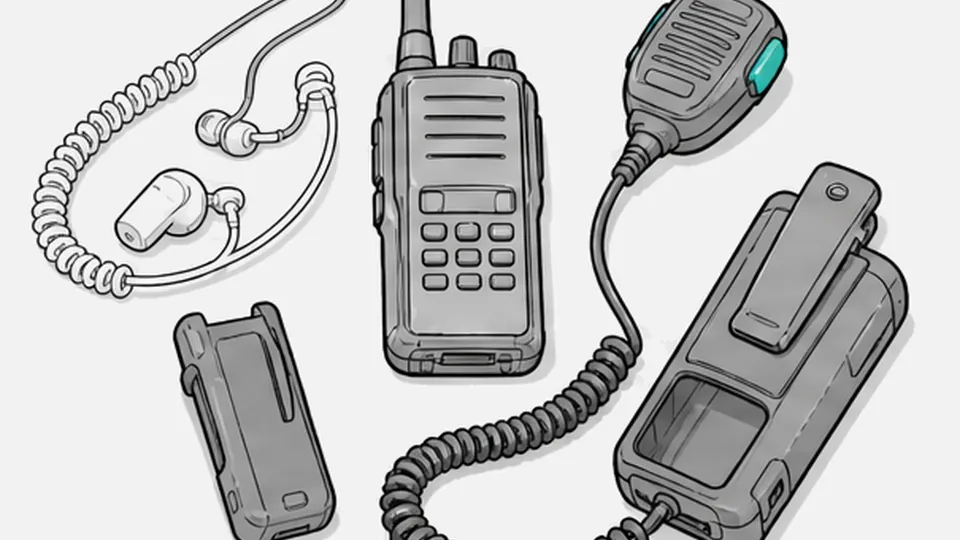
Accessories decide how well radios work on a shift. Buy these with the radios:
- Earpieces. A receive-only earpiece keeps talk private in a shop or hotel. A headset with a boom microphone fits loud sites. The earpiece guide explains the types.
- A multi-unit charger. One charger holds several radios, so the whole team starts each shift full.
- Spare batteries. Motorola lists four batteries for the R7, from 2,200 to 3,200 mAh.9 A spare covers a double shift.
- Smart chargers. Motorola's IMPRES batteries store their charge history, and the charger uses it to decide when to recondition each battery.25
- Programming software and a cable. Dealers use them to set channels and names. The XT420 software is a free download, and the cable is sold separately.12
Questions
What are the best two-way radios for business?
The best radio is the one that fits your site. License-free PMR446 or FRS radios suit one building. Licensed 4 to 5 W UHF or VHF radios suit large sites, and DMR suits many teams.123
Do business walkie-talkies need a license?
PMR446 in Europe and FRS, MURS and 900 MHz radios in the US need none.12108 Radios on business frequencies, such as the Motorola CLS and RMU lines, need an FCC license.1516
Which walkie-talkies suit a school?
For one campus, license-free radios with simple buttons are enough. A larger district can license its own frequencies, since US rules let schools hold business radio licenses.6
Which radios work in a hospital?
Hospitals have many floors and many teams, so licensed UHF or DMR radios fit best. US rules let hospitals and clinics hold business radio licenses.6
Sources
- MOTOTRBO R2 data sheet (EMEA) · Motorola Solutions
- The DMR standards, developed by ETSI · DMR Association
- TLK 110 two-way radio · Motorola Solutions
- Curve Wi-Fi enhanced business radio data sheet · Motorola Solutions
- DTR700 digital two-way radio · Motorola Solutions
- MOTOTRBO R7 data sheet (EMEA) · Motorola Solutions
Show all 25 sources
- Guidance for Business Radio · Ofcom
- XT420 business two-way radio · Motorola Solutions
- CLS1410 two-way radio · Motorola Solutions
- CLS Series user guide · Motorola Solutions
- RM Series two-way radio user guide: RMU2040, RMU2043, RMM2050 · Motorola Solutions
- MOTOTRBO CP100d Series portable radios · Motorola Solutions
- Overview of Zello Work · Zello
- Occupational noise exposure · OSHA
- XT400 series specification sheet · Motorola Solutions
- MOTOTRBO portable radios (EMEA) · Motorola Solutions
- 47 CFR 90.149: license term · eCFR
- Intelligent battery management: IMPRES white paper · Motorola Solutions